By Cedar Pruitt, Charlesbank Consulting
Career development is a crucial part of internal growth for any organization. Whether your company promotes from within, brings in new ideas and expects them to be adopted, or both, forward progress requires employees who are able and willing to develop their careers.
But they can’t do it without developing their relationships. And that’s not always easy.
Because the hardest thing about business isn’t business problems…it’s people problems.
Of course, we already know that investing in relationships is the challenge and opportunity for most of us. But the question is: which relationships?
**We have a great course on this topic that is easily covered by most management training budgets.
Because even standout employees who excel in competencies like Execution, Synthesis, Analysis and Communication might lack the ability to Influence.
But even more commonly, strong players who can do it all simply do NOT KNOW exactly which relationships to target. They over-communicate with some and under-communicate with others.
When it’s time to be considered for a raise, promotion, new responsibility or lateral shift, their stakeholders just aren’t quite sure about them. And the biggest pitfall? No one sees the actual problem! Instead, the employee takes the blame for simply…not getting there.

I’ve been struck by how many clients lack an accurate understanding of their stakeholders. They don’t know who they are and they certainly don’t know what they need. But I, too, have fallen into that trap, and have come to see how we get there so easily.
Here’s what happens: We are fooled by the org chart. It seems to map out everyone in a very clear and logical order, and leads us to assume that our projects probably graze those pictured closest to us on the org chart…meaning that those are our stakeholders, right?
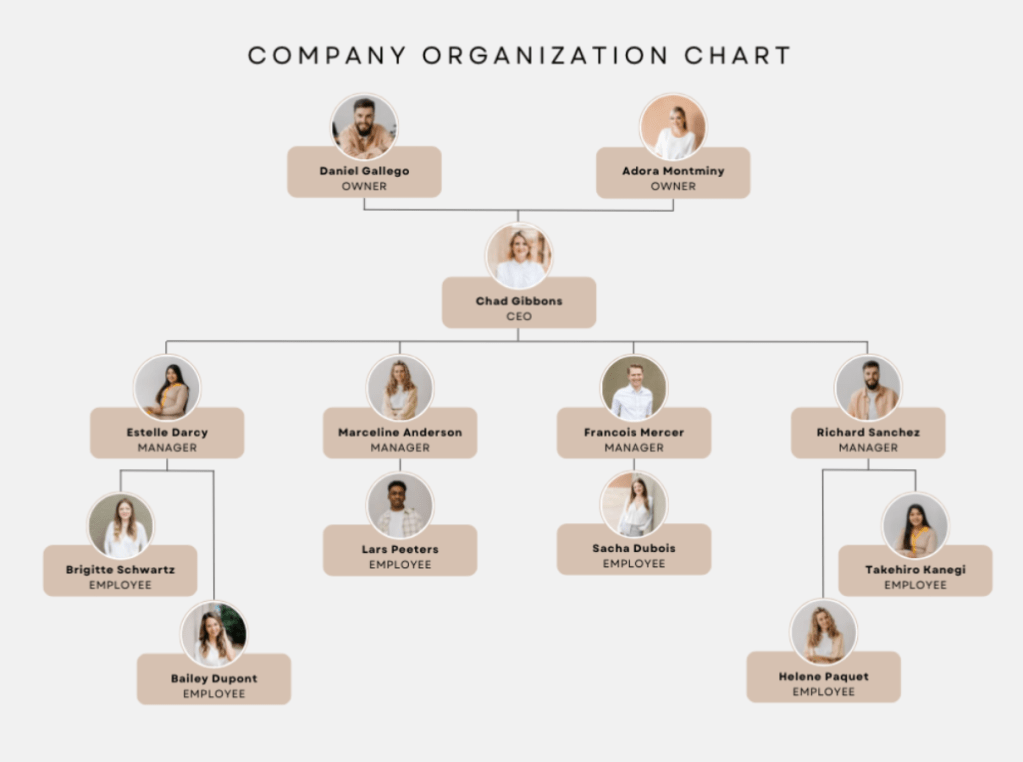
Unfortunately for us, org charts lie. Our true stakeholders may exist on the fringes of the org chart. They may populate spaces outside the org chart. Or they might center on influential leaders of other teams.
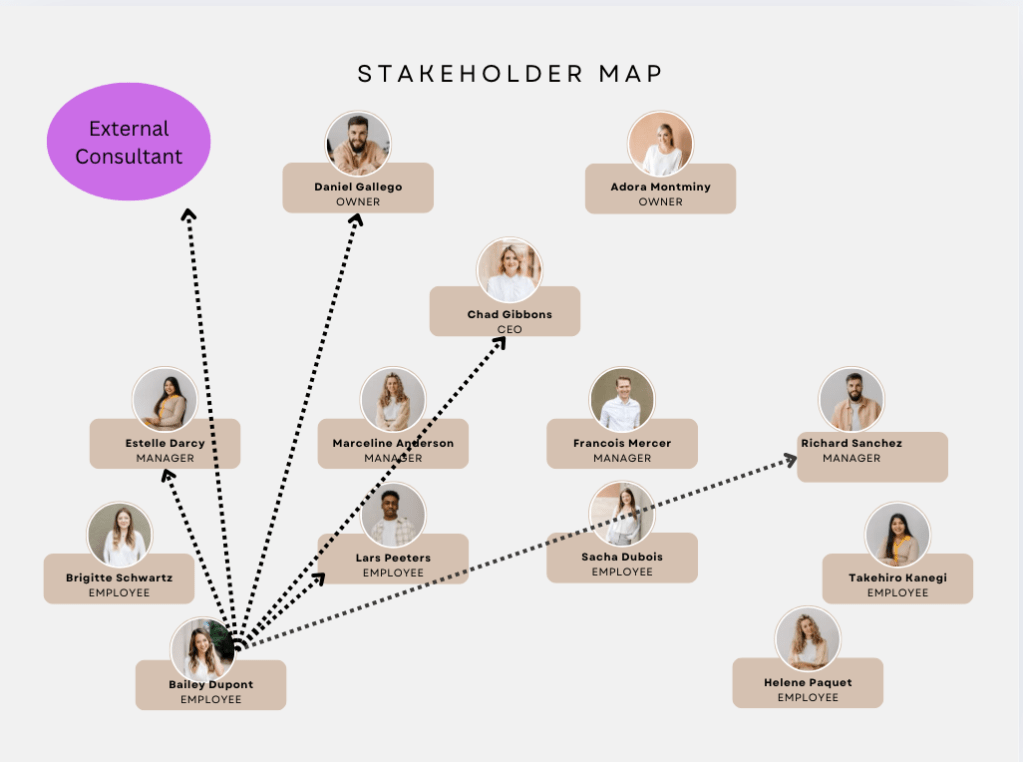
This realization can feel overwhelming at first. It’s hard enough to learn to manage up, and down, and sideways. It’s utterly exhausting to think of trying to manage in a dotted wavy diagonal line.
But the great thing about creating a stakeholder map that overlaps an org chart is that we learn where we can shift our energy, and where we might be overinvesting.
It creates clarity and ease in prioritization, and focuses our communication efforts.
And that brings us to the next level of stakeholder mapping: providing stakeholders with what they need. We can assume we know what they need, but most of us realize at some point that making assumptions doesn’t always guarantee success.
That’s why communication with stakeholders should include listening to the answers that come from asking the right questions.
Figuring out the right questions isn’t always easy, either. But they include things like:
- How would you like me to update you on the status of this project?
- How will you know if we’ve achieved a successful outcome?
- What do you see as my strengths and development needs on this project?
You never know when you might turn a stakeholder into a mentor…. Or mentor your stakeholder!
It’s all part of building effective relationships, creating an agile organization, and developing your fabulous career.
Whether it’s through workshops, coaching, retreat facilitation and strategic alignment, I can help make stakeholder investment a part of your company culture. We’ll figure out what works for you. Consider this article the first step on that path, and contact me to continue the conversation.
©2025 Charlesbank Consulting
 CHARLESBANK